
What's Really Happening When Your Child Stares at the Page and Goes Blank
You ask your child to read a sentence. They look at the page. A few seconds pass. Then a few more. Their eyes seem fixed on the words - but nothing comes out. When you gently ask what they read, they can't tell you.
More...
It's one of the most frustrating things a parent can experience. And it's easy to think: they're not trying. They're daydreaming. They just don't want to do this.
But here's what we've seen in over 20 years of working with children who struggle with reading: that blank stare is not laziness. It's a brain response. And once you understand what's actually happening, everything changes.
The Brain Does Something Unexpected When It Gets Confused
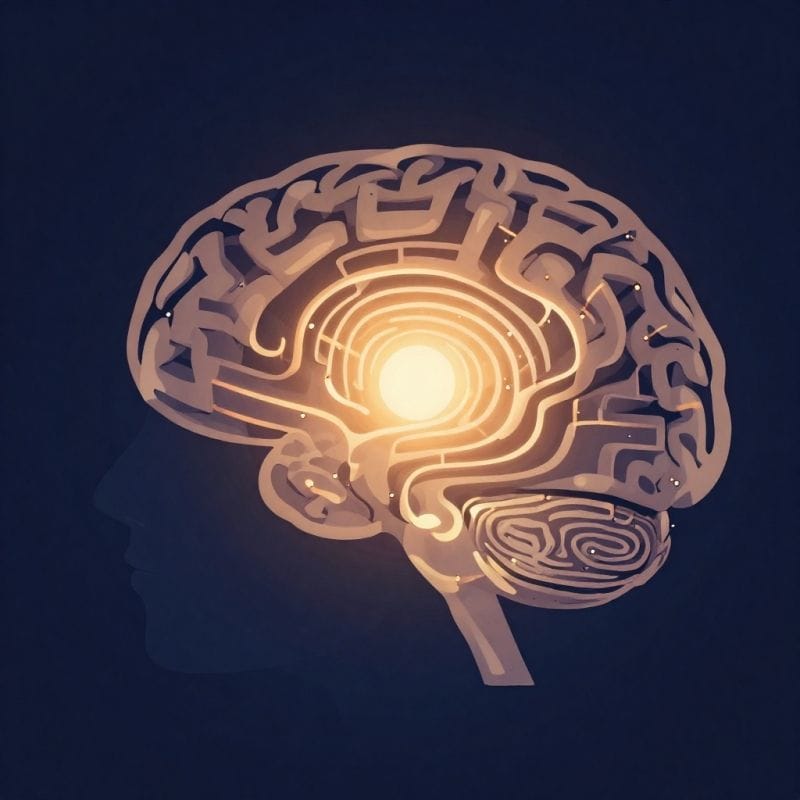
When a child with dyslexia looks at a word they don't recognize, their brain doesn't simply pause. It turns inward.
Think of it like a computer running a search it can't complete. The system doesn't freeze - it keeps working. But all the energy goes inside, trying to find the answer. Meanwhile, the outside world - the book, the sentence, your voice - fades away.
This is what researchers call disorientation. It's a temporary mental state where the brain loses its connection to the page because it's too busy trying to decode something it doesn't understand.
Your child isn't ignoring the words. Their brain is working overtime - just not on the right thing.
Why Some Words Trigger This More Than Others
Here's something that surprises most parents: the words most likely to cause a blank stare are not long or complicated ones.
A child with dyslexia can often read "motorcycle" or "dinosaur" with no problem. But "the," "and," "of," "under" - these tiny words stop them cold. Why?
Children who struggle with reading tend to think in pictures. When they see "motorcycle," a clear image pops into their mind. The word has meaning. Their brain locks on and moves forward.
But abstract words like "the" and "of" have no picture. There's nothing to visualize. The brain stalls. And when the brain stalls on these tiny words - which make up more than half of everything we read - a child can go blank several times in a single sentence.
That's not a comprehension problem. That's a recognition problem. And it's happening at a very deep level in how the brain processes language.
What Happens to Attention During Disorientation
Here's the part that most parents don't know - and it explains so much.
Attention and disorientation cannot exist at the same time. When a child is disoriented - confused by a word, a letter, or a symbol - their attention is completely pulled inward. They are not with you. They are not with the page. They are inside their own head, trying to solve a puzzle they don't have the tools to solve.
This is why children often can't tell you what they just read. It's not that they weren't trying. It's that they were never really "there" for parts of it.
And it's also why they miss instructions, forget what they were doing, or seem to need everything repeated. The brain's attention system is closely linked to how well it can process the symbols on the page.
When reading is hard, attention disappears. It's a direct connection - not a behavior problem.
Why This Looks Like Laziness (But Isn't)
When a child avoids reading, resists sitting down, or seems to be "somewhere else" during reading time, it's easy to assume they just don't want to try.
But children don't avoid reading because they're lazy. They avoid it because it feels overwhelming and exhausting. Every line requires enormous mental effort just to get through the words - before they can even begin to think about what those words mean.
Imagine trying to have a conversation in a language you barely speak. You can follow parts of it. But you have to think so hard about every word that by the time you've understood one sentence, you've already missed the next three.
That's what reading feels like for many children with dyslexia. The blank stare is the brain saying: I'm full. I can't take in any more right now.
Want to understand what your child needs? Keep reading.
What Actually Helps: Training the Brain to Recognize Faster
Once you understand that the blank stare comes from disorientation - not laziness - a completely different approach becomes possible.
The goal is not to make your child try harder. The goal is to train the brain to recognize words faster - so it stops getting stuck. When a child can recognize a word instantly, there's no moment of confusion. No inward search. No blank stare.
Think of it like learning to ride a bike. At first, every movement requires thought. Balance, steering, pedalling - the brain is working hard on all of it at once. But over time, those movements become automatic. The brain stops thinking about them and just does them.
Reading works the same way. When word recognition becomes automatic, the brain's energy is freed up for understanding the story - not decoding the letters.
Small Daily Practice Makes a Big Difference
This is where parents are often surprised. Short, consistent practice works better than long, irregular sessions.
A 5-minute daily session is far more effective than a 30-minute session once a week. The brain builds automaticity through frequent, low-pressure repetition - not through marathon effort.
And when sessions are short, children are less likely to hit the point of exhaustion where the blank stare takes over. They finish feeling capable, not defeated.
What we've seen in our work is that when response speed improves - even slightly - reading becomes less draining. And when reading becomes less draining, children stop avoiding it. Confidence follows naturally.
What You Can Do Right Now
If your child goes blank during reading, here are three things to keep in mind:
1. Don't interpret the blank stare as giving up. It's the brain working hard on a problem it hasn't yet learned to solve automatically. Stay calm. Let them take a breath.
2. Skip the word and keep the story moving. If your child gets stuck, simply say the word for them in a neutral voice. Let them repeat it and move on. The goal is to keep reading feeling safe - not to drill every difficult word in the moment.
3. Keep sessions short. Five minutes of focused, supported reading is worth more than twenty minutes of frustration. End on a positive note, before exhaustion sets in.
The blank stare is not a sign your child can't learn to read. It's a sign that their brain needs a different kind of support - one that builds speed and recognition from the ground up.
There Is a Better Way Forward
The Viking Reading Program was built around exactly this understanding. Instead of more phonics drilling or longer reading sessions, it focuses on training the brain's response speed - so that words become automatic, disorientation decreases, and reading starts to flow.
Parents who go through the program often tell us the same thing: the first thing they notice is that their child stops going blank. The staring stops. The resistance eases. Reading starts to feel different.
That change doesn't take years. With consistent daily practice, most families begin to see a difference within the first few weeks.